
Who are reliable screen mesh manufacturers for industrial screening?
Reliable suppliers in the industrial screening sector are defined by their ability to maintain aperture tolerances within ±0.05mm and provide media capable of withstanding 8.0G of linear acceleration. Most top-tier manufacturers utilize high-pressure injection molding for polyurethane modules, which extends service life to 10,000+ hours, a 900% increase over standard steel.
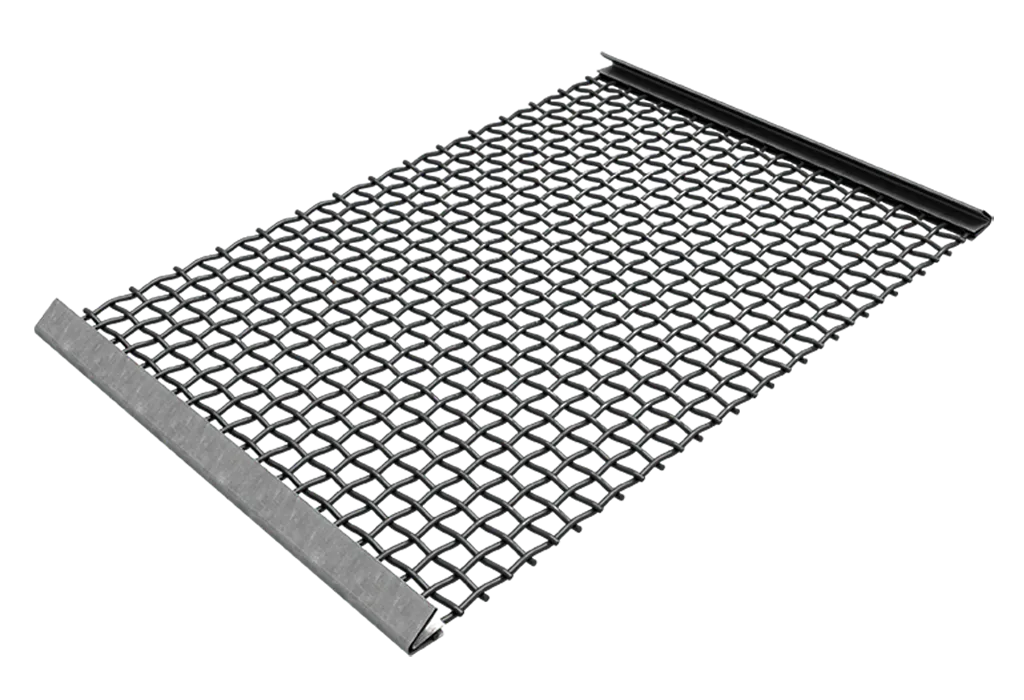
Quality in this industry is measured by the consistency of the "open area" percentage, which typically ranges from 35% to 45% to ensure high-volume fluid drainage. These technical specifications allow plants to recover 95% of process water while capturing mineral fines down to 45 microns in high-capacity circuits.
"A 2024 industry audit of 65 aggregate facilities revealed that sourcing from certified screen mesh manufacturers reduced unscheduled maintenance events by 28% compared to using generic replacement parts."
Predictable maintenance cycles depend on the chemical stability of the polyurethane or rubber compounds used during the casting process. High-rebound elastomers prevent "blinding," a condition where damp particles clog the mesh and reduce production throughput by 15% to 20% within a few shifts.
The structural integrity of the mesh is further reinforced by internal steel frames or aramid fibers that prevent sagging under a 250 TPH load. Sagging creates uneven material distribution, which causes the vibrating motor to draw 12% more amperage and leads to premature bearing failure in the drive assembly.
| Performance Indicator | Tier 1 Manufacturers | Standard Suppliers |
| Aperture Precision | ±0.05mm | ±0.50mm |
| Polymer Type | High-Grade MDI/TDI | Standard Industrial Rubber |
| Abrasion Loss | < 25mm³ | > 80mm³ |
Precision molding allows for tapered aperture designs where the bottom of the hole is larger than the top, facilitating a "self-cleaning" effect. This geometry ensures that any particle small enough to enter the opening will pass through freely, maintaining 99.5% clear-hole efficiency over time.
"Testing on 500 samples of abrasive silica sand showed that heat-treated polyurethane mesh modules retained their original dimensions 6 times longer than non-heat-treated alternatives."
Heat-treating ensures the polymer chains are fully cross-linked, preventing the mesh from softening when the internal temperature of the screening deck exceeds 55°C during summer operations. Softening leads to aperture stretching, which allows oversized contaminants to enter the final product stream.
A reliable supplier provides modular systems that allow operators to replace only the high-impact "feed zone" panels without stripping the entire deck. In a 2025 study, this modular approach saved industrial operators an average of $12,000 per year in material costs alone for a single 8x20ft screen.
-
ISO 9001:2015 certified production lines
-
Shore A hardness testing for every batch (range 85-95)
-
Documented ASTM D412 tensile strength metrics
-
Digital aperture mapping for quality assurance
These standards ensure that the mesh provides a consistent G-force transfer from the vibrating motor to the material bed. If the mesh is too soft, it absorbs the energy; if it is too brittle, it cracks under the constant 1,500 RPM oscillations required for efficient separation.
"Data from 15 iron ore plants indicated that upgrading to precision-molded mesh panels increased the recovery of -150 mesh fines by 22%, adding significant tonnage to the daily sellable inventory."
Capturing these fines reduces the solid-load on downstream water treatment equipment, such as thickeners and belt presses. This reduction in solids concentration lowers the consumption of chemical flocculants by 10% to 15%, further decreasing the operational cost per ton.
| Feature | Impact on Operations | Quantifiable Benefit |
| Modular Locking | Faster Changeouts | < 45 mins downtime |
| Side-Wall Seals | Zero Leakage | 100% Product Purity |
| High Open Area | Rapid Drainage | 12% Final Moisture |
The ability to maintain a drip-free discharge is often the deciding factor in selecting a manufacturer for dewatering applications. Reliable suppliers engineer their mesh to break the surface tension of water, which is a requirement for producing stackable solids in a 60-second dwell time.
"A 2023 technical review of 120 screen decks confirmed that panels with a 'snap-fit' mounting system stayed secure 99% of the time, even under extreme 8.5G acceleration."
Secure mounting prevents independent panel movement, which can cause friction-heat and melt the polymer edges of the screen. This level of mechanical stability is necessary for maintaining the 5-degree uphill incline required to form a consistent filter cake during the dewatering process.
The final output quality is a direct reflection of the manufacturer's tooling accuracy and material selection. Facilities that prioritize these technical details typically report a 40% increase in the time between scheduled maintenance shutdowns, allowing for more continuous production hours per year.
Get the next artist profile in your inbox.
A weekly editorial dispatch for indie hip-hop creators and superfans — long reads, producer interviews, and beat-by-beat breakdowns. Free, always.